Myrrh essential oil and the endogenous opioid system...
... evidence based neuroaromatherapy for addiction treatment and trauma recovery
Tammy L. Davis
12/18/20253 min read
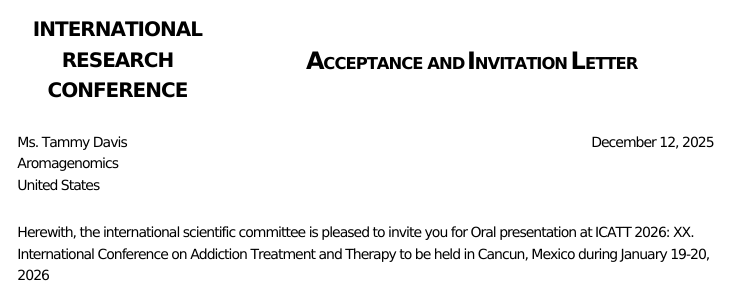
The report from the following abstract has been completely reviewed and approved for publication and presentation!
Abstract
Background: The opioid crisis affects over 16 million people worldwide, with current treatments limited by high relapse rates and inadequate addressing of underlying neurobiological and social dysregulation. The endogenous opioid system—comprising μ, κ, δ, and nociceptin receptors and their peptide ligands—plays a pivotal role in pain modulation, social bonding, stress regulation, and reward processing. Emerging research demonstrates that addiction is fundamentally a disconnection disorder: social isolation is both a cause and consequence of opioid system dysregulation. Bruce Alexander's landmark "Rat Park" studies (1970s) showed that socially-housed rats in enriched environments consumed dramatically less morphine than isolated rats, demonstrating that "a social community beat the power of drugs." Human evidence from Vietnam War veterans confirms this: 95% of soldiers who were addicted to heroin in Vietnam stopped using upon returning home to their communities, with minimal relapse. Research consistently identifies belonging to a supportive social network as among the strongest predictors of sustained remission from addiction. Traditional aromatherapy has utilized myrrh (Commiphora myrrha) for millennia; however, the neurobiological mechanisms underlying its therapeutic effects have only recently been elucidated.
Purpose: This presentation synthesizes peer-reviewed research demonstrating how specific constituents in myrrh essential oil directly interact with opioid receptors in the central nervous system, providing a scientific foundation for integrating neuroaromatherapy into addiction treatment protocols.
Methods: Comprehensive literature review of peer-reviewed studies examining: (1) myrrh essential oil constituents and their opioid receptor binding properties; (2) endogenous opioid system functions in pain, social bonding, stress response, and reward processing; (3) opioid system dysregulation in substance and behavioral addictions; and (4) clinical applications of opioid-modulating compounds in addiction recovery.
Key Findings:
Pharmacological Mechanisms:
Furanoeudesma-1,3-diene acts as a specific δ-opioid receptor agonist with naloxone-reversible analgesic effects (Dolara et al., 1996)
Curzerene demonstrates pronounced analgesic effects through opioid receptor interaction, with activity blocked by naloxone
β-Caryophyllene, a CB2 receptor agonist, stimulates endogenous β-endorphin release from keratinocytes, producing opioid-mediated antinociception without direct receptor agonism
Clinical trials demonstrate efficacy at 8-16 mg bioactive furanodienes daily for various pain conditions
Neurobiological Targets:
Social bonding: Research demonstrates that shifting from social isolation to connectedness is a principal factor in recovery; the endogenous opioid system serves as the mechanistic basis for this bidirectional link
Community as medicine: Vietnam veteran studies show 95% cessation rates upon return to community; Rat Park experiments demonstrate social environment can overcome drug reinforcement
Opioid medication paradox: Treatment medications (methadone, buprenorphine, naltrexone) may reduce social connection pursuit, potentially undermining recovery
Stress response: Endogenous opioids oppose stress mediators; myrrh constituents provide multi-system regulation
Reward processing: Blunted opioid release in behavioral addictions; potential for homeostatic restoration
Pain-addiction comorbidity: 80% of opioid use disorder patients report pain as initial use reason
Clinical Implications:
Unlike exogenous opioid agonists, myrrh compounds modulate receptors without dependency risk
Integration with community-based recovery: Myrrh neurobiologically primes the opioid system for social bonding while therapeutic communities provide actual relational experiences
"Connection as treatment" model: Aromatherapy must be embedded in relationally rich contexts—never used to replace human connection
Multi-target approach addresses pain, stress, social isolation, and reward deficiency simultaneously
Application across recovery phases: acute withdrawal support, community stabilization, and relapse prevention through sustained belonging
Conclusions: Myrrh essential oil represents a scientifically grounded, biologically plausible intervention that addresses the neurobiological roots of addiction through endogenous opioid system modulation. The convergence of Rat Park research, Vietnam veteran studies, and contemporary social neuroscience validates what Alexander concluded: addiction fundamentally reflects social and cultural dislocation, with addictive substances serving as substitutes for a full life. The evidence supports a paradigm shift from symptom suppression to dual restoration—both neurobiological (opioid system homeostasis) and social (community belonging). Myrrh's unique pharmacology creates the neurobiological foundation for reconnection, while community-based implementation provides the relational experiences necessary for sustained recovery. This presentation will provide clinicians with evidence-based protocols for integrating myrrh-based neuroaromatherapy into community-oriented addiction treatment that honors the fundamental truth: the opposite of addiction is not sobriety—it is connection.
Clinical Relevance: With 50% of chronic opioid therapy patients meeting criteria for opioid use disorder and over 120,000 annual opioid-related deaths worldwide, innovative approaches addressing underlying neurobiological dysregulation are urgently needed. This presentation offers practical, implementable strategies for addiction professionals, mental health providers, and integrative medicine practitioners seeking evidence-based complementary interventions.
Innovative Therapies in Addiction Medicine / Integrative Approaches to Mental Heal